

Select papers
A Theory of Tragedy What distinguishes tragedy from just another sad story? Oddly, this isn’t really explained in Aristotle or elsewhere. PDF
Utopia and the Minimal State An interpretation of Nozick’s thought that the true utopia is the meta-utopia—one of Nozick’s best ideas! PDF
Keeping Ideology in its Place Offers a theory of how to think about ideology, why it is a threat to liberal institutions, and why we nevertheless need some ideology. Philosophical Studies PDF
The Rationality of Emotions across Time Our emotions rise and fall even as what we’re reacting to—a birth, a loss—stays the same. This is surprisingly hard to make sense of, and I say we should give up trying. The emotions are functionally constrained to return to baseline, but that means they often make no sense. Dialogue PDF
The Boring A lot of art and the rest of life are pretty boring, but philosophers and critics tend to avoid admitting it. I offer an account of the boring, using Wagner as a case-study. Journal of Aesthetics and Art Criticism PDF
Love and Death I explore various reasons we might have for regretting our resilience to loss, both because of what resilience tells us about our ultimate significance to others, and because resilience may render us incapable of comprehending the true nature of a loss. The Journal of Philosophy PDF
Global Justice and Economic Growth: Ignoring the Only Thing that Works What should a time traveling altruist do in 18th century Britain, amid poverty and malnourishment? There is a serious case to be made that he should promote commerce and economic growth. Buying railroad stock and so capitalizing firms participating in industrialization would be an eminently worthy (if unsentimental) approach to take. The same lesson applies today. Altruism disconnected from the ultimate aim of growth is senseless. In Economic Liberties and Human Rights, Routledge PDF
Property and the Creation of Value Most philosophical discussions of property have followed Locke in focusing on natural resources as the key to wealth. But in modern economies wealth is mainly generated by services. This casts doubt on philosophical programmes predicated on the natural resource paradigm, and makes wealth transfers harder to justify. Philosophy and Economics, PDF

“A superb biographical vignette. Alternately scholarly and effusive. An eccentric, adoring tribute to Bach.” -- Kirkus Reviews
“Highly personal, beautifully written, hugely inspiring.” -- Jerrold Levinson, editor of The Oxford Handbook of Aesthetics
Against the Harpsichord, First Things
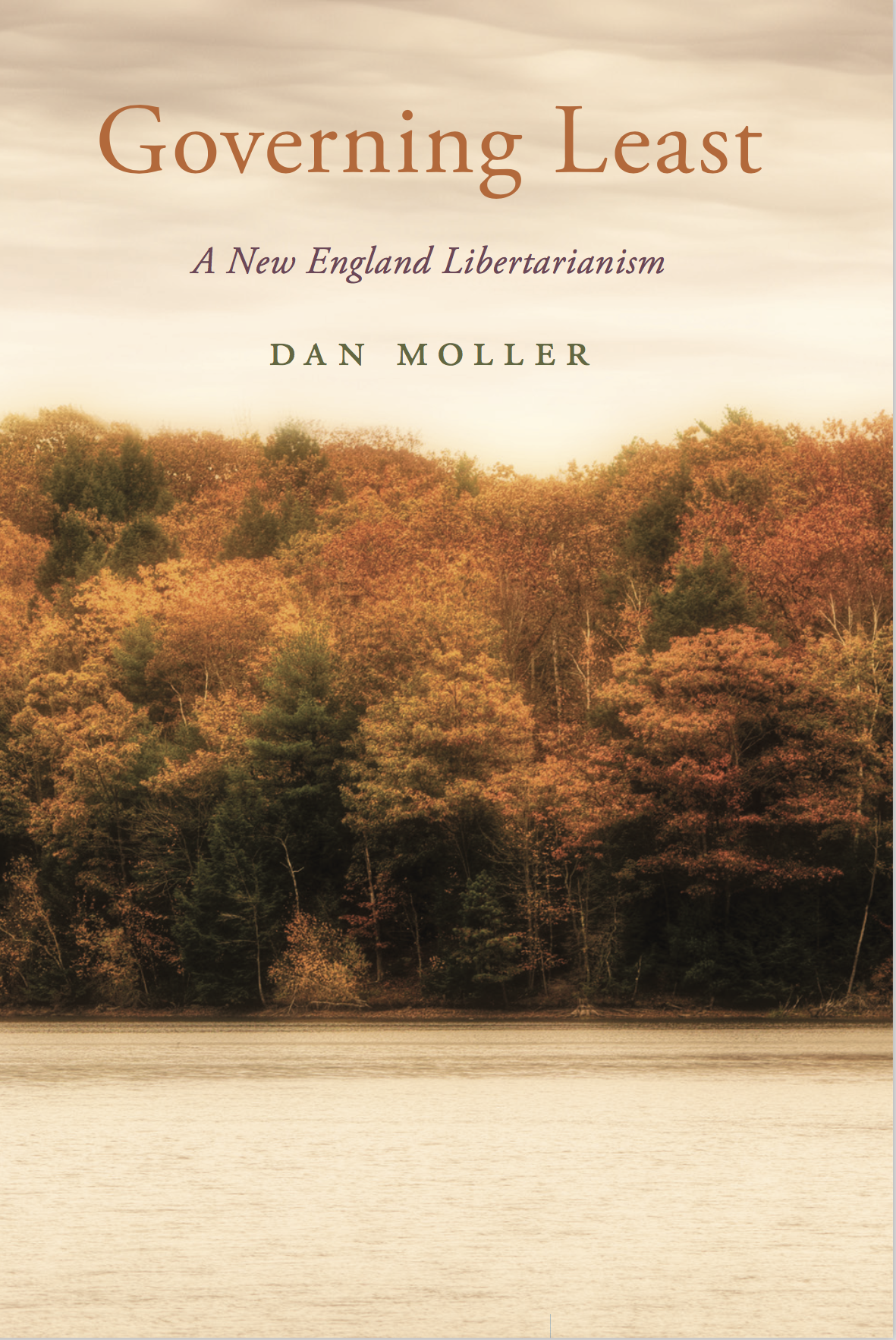
“This is a splendid accomplishment. I judge it to merit a place among the handful of finest political philosophy books of the previous decade.” –Loren Lomasky, University of Virginia
“From the stunningly lucid first line to the homey examples (restaurants, sand castles), this is the best book on libertarian philosophy in years. Moller manages to walk the thin line of favoring self-reliance (and neighborliness) without going Ayn Rand on us.” –Stephen Carter, Yale Law School, in Bloomberg
“One of the most sensible expositions and defenses of libertarianism you will find” –Tyler Cowen, Marginal Revolution
“Read this great book!” “Governing Least is so packed with insight that I could easily have made this post three times longer.” –Bryan Caplan, author of The Myth of the Rational Voter
UMD Philosophy dmoller@umd.edu CV Pictures Church